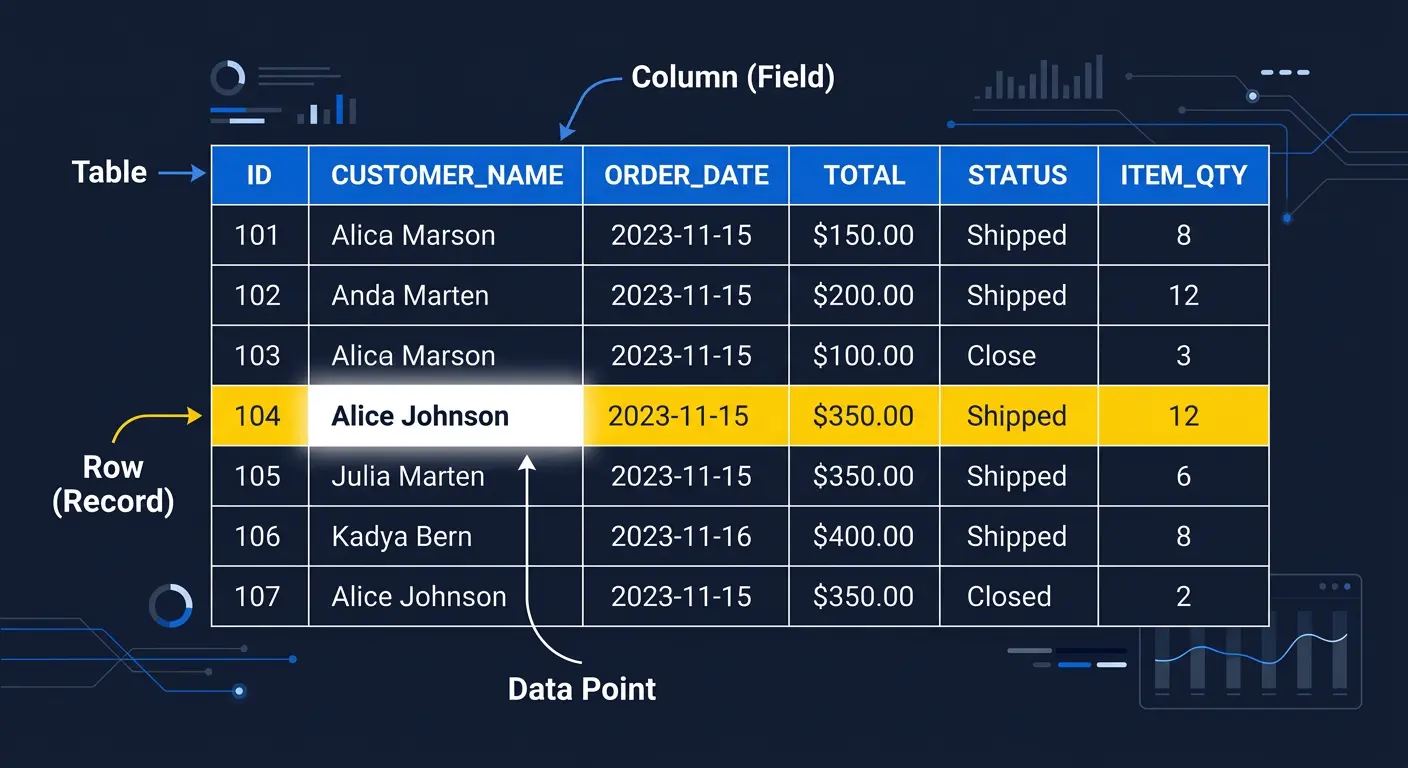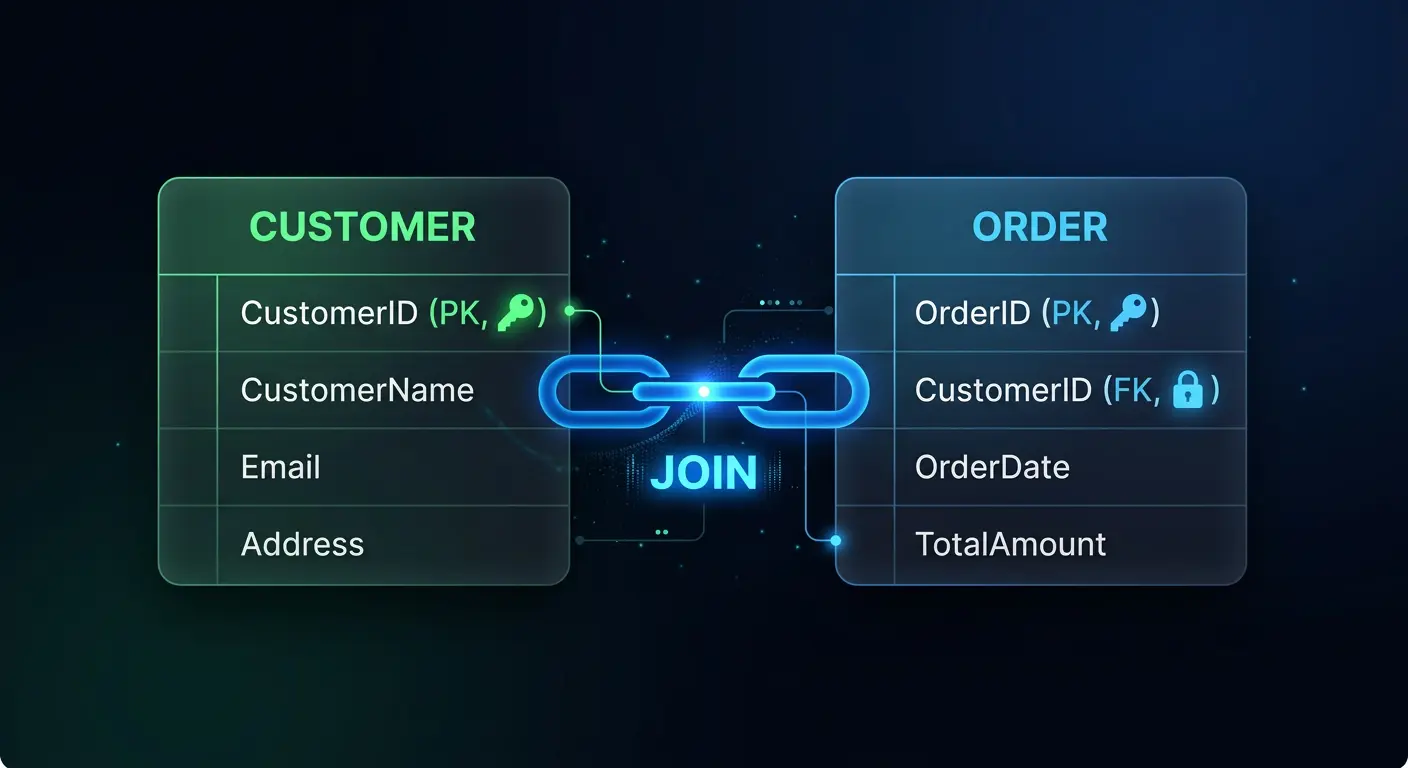
If tables are the building blocks of a relational database, then Primary Keys and Foreign Keys are the connectors that transform isolated tables into a coherent, queryable system. Without them, you cannot enforce data integrity, prevent duplication, or run meaningful cross-table queries.
The Problem They Solve: Redundancy and Inconsistency
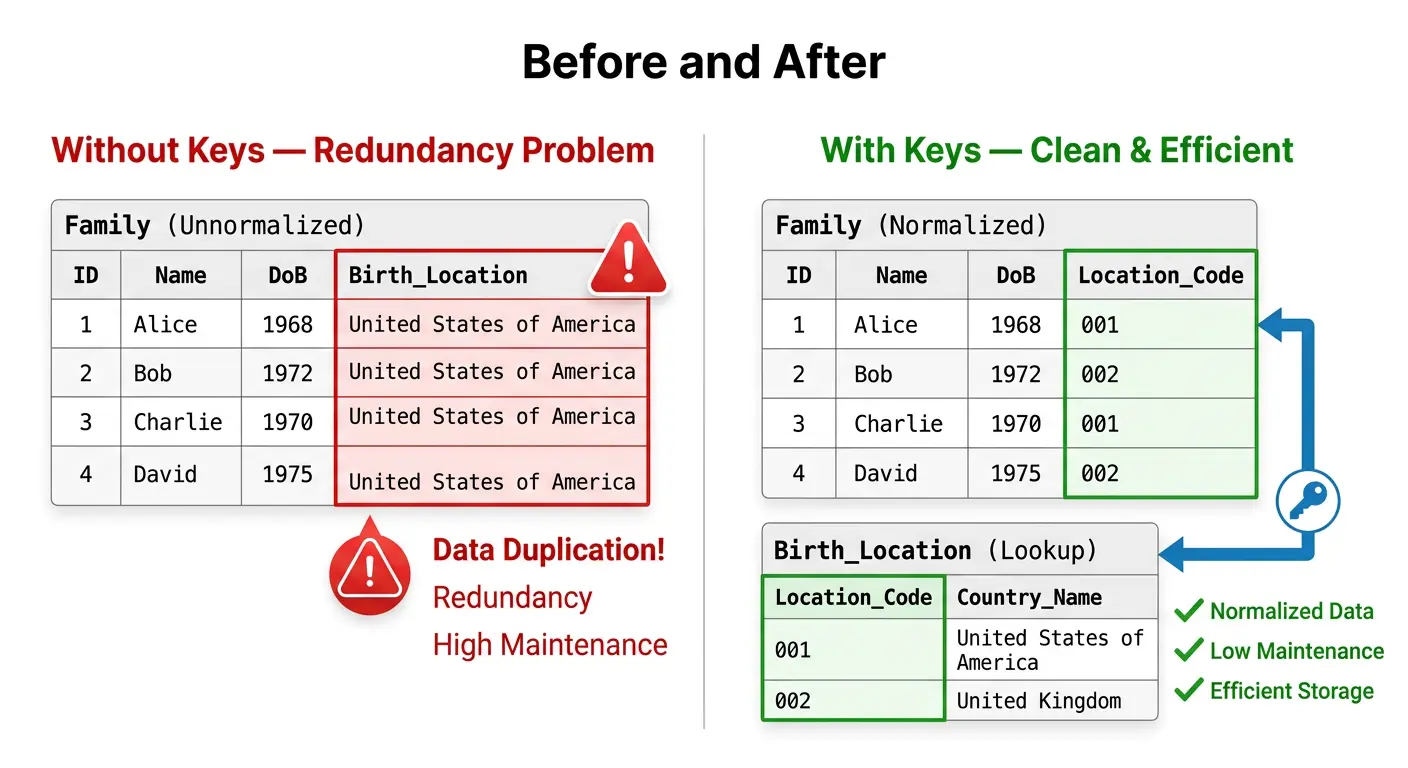
Imagine a Family table that stores each person's birth country. When five members share “United States of America”, it’s stored five times. This creates:
- Storage redundancy: the same long string repeated unnecessarily
- Inconsistency risk: typos like “Unted States” creep in without detection
- Update complexity: renaming a country means updating every single row
The solution: extract the repeated data into a lookup table and use keys to link the two tables together.
Step-by-Step: How Primary and Foreign Keys Work
Step 1: Create a Separate Location Reference Table
First, extract the repeating country data into its own dedicated table with a unique identifier for each entry:
| ID (Primary Key) | Country Name |
|---|---|
| 001 | United States of America |
| 002 | United Kingdom |
| 003 | Canada |
Step 2: Update Family Table to Use the Code (Foreign Key)
Now replace the full country name in the Family table with a short code that references the Location table:
| Name | Relationship | Date of Birth | Location_ID (Foreign Key) |
|---|---|---|---|
| John | Grandfather | 01 Jan 1950 | 001 |
| Mary | Grandmother | 15 Mar 1952 | 001 |
| Robert | Father | 20 Jun 1975 | 002 |
| Susan | Mother | 05 Sep 1977 | 001 |
This is a pattern central to reference data management.
What Is a Primary Key?
A Primary Key uniquely identifies each row in a table. It is the single source of truth for that record’s identity. The rules are strict:
- No nulls: every row must have a value
- Must be unique: no two rows can share the same primary key
- Should be stable: once assigned, it should not change
Common patterns include auto-incrementing integers, UUIDs, and natural business keys (such as ISO country codes).
What Is a Foreign Key?
A Foreign Key is a column in one table that references the Primary Key of another table. It enforces referential integrity, ensuring that every reference points to a valid, existing record. If the Location table has no entry with ID 999, then no row in the Family table can use 999 as its Location_ID.
Running a SQL JOIN Using Keys
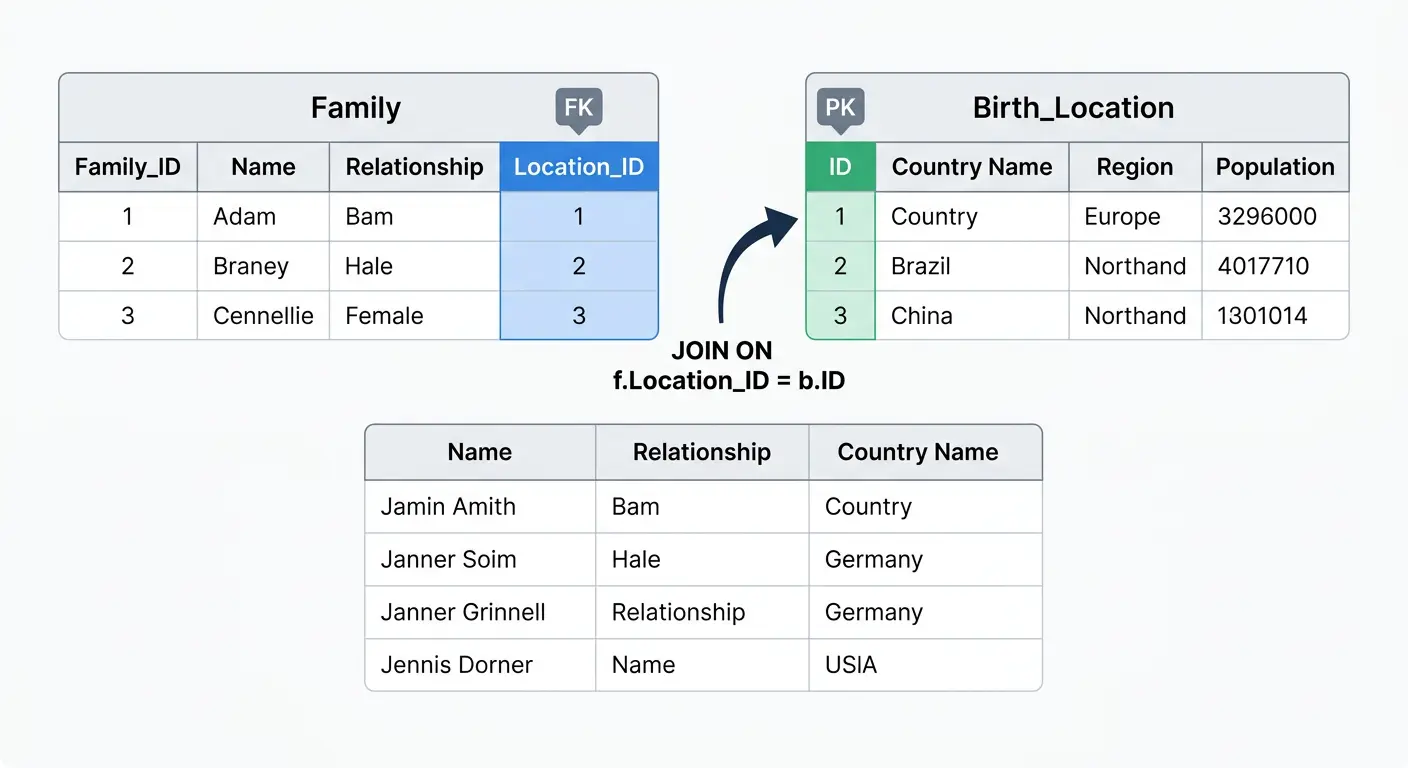
With both keys in place, you can combine data from multiple tables using a SQL JOIN:
SELECT f.Name, f.Relationship, b.CountryName
FROM Family f
JOIN Birth_Location b ON f.Location_ID = b.ID;
This query produces the following result:
| Name | Relationship | Country Name |
|---|---|---|
| John | Grandfather | United States of America |
| Mary | Grandmother | United States of America |
| Robert | Father | United Kingdom |
Primary Key vs Foreign Key: Quick Reference
| Feature | Primary Key | Foreign Key |
|---|---|---|
| Purpose | Uniquely identifies a row | References a Primary Key in another table |
| Uniqueness | Must be unique | Does not need to be unique |
| Null values | Never allowed | Allowed in some systems |
| Location | Parent/reference table | Child/dependent table |
| Count per table | Only one | Multiple allowed |
Why This Matters Beyond Simple Queries
Primary keys and foreign keys are not just SQL plumbing. They underpin critical enterprise data capabilities:
- Data normalisation: eliminating redundancy through structured table relationships
- Data integrity enforcement: preventing orphaned records and invalid references
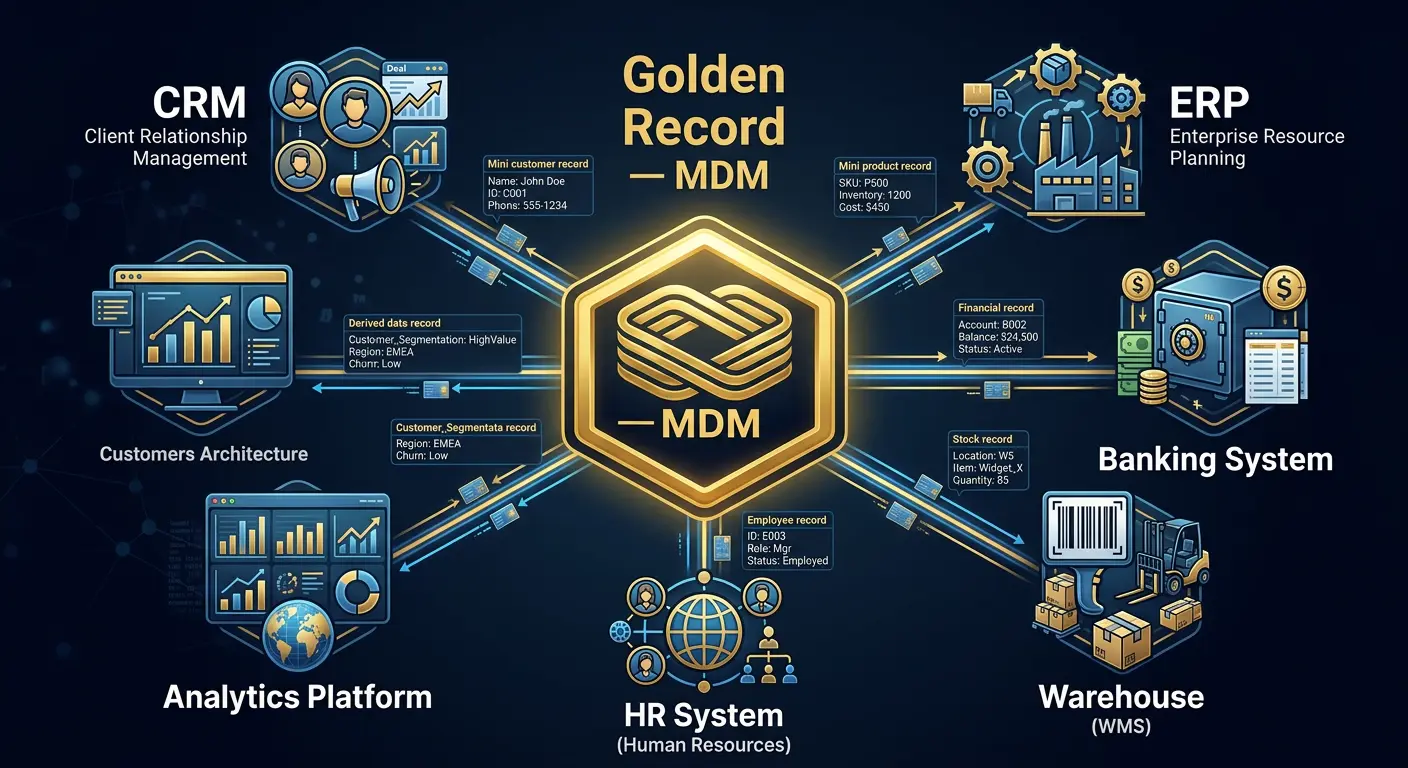
- Master Data Management (MDM): maintaining golden records that other systems reference
- Data lineage and governance: tracing how data flows between tables and systems
- Data architecture: building scalable warehouse and lakehouse designs on solid relational foundations
Key Takeaway
Primary Keys give every record a unique, stable identity. Foreign Keys create the connections that make relational databases truly relational. Together, they transform a collection of spreadsheets into a scalable, governed, queryable data system. Our data modelling and Data Vault training programmes cover these relational design principles in depth.

Want database architecture built on solid foundations?
Your Partner Technologies delivers data modelling and architecture expertise for scalable, governed systems.
Talk to Us →