If you are building a database, designing a data model, or studying for a data or software engineering certification, one concept sits at the foundation of everything: the entity. Misunderstand this, and every downstream design decision becomes compromised. Get it right, and you have the bedrock for scalable, reliable data systems. This is why data modelling expertise is central to every well-designed architecture.
What Is an Entity in Data and Databases?
An entity is anything that can be uniquely identified and described within a data system. In data modelling, entities typically represent real-world objects, people, concepts, or events, such as a Customer, Product, Invoice, or Transaction.
Entities are structured around three concepts:
- Entity Type: the blueprint or schema
- Entity Attribute: the properties or fields
- Entity Instance: the actual data record
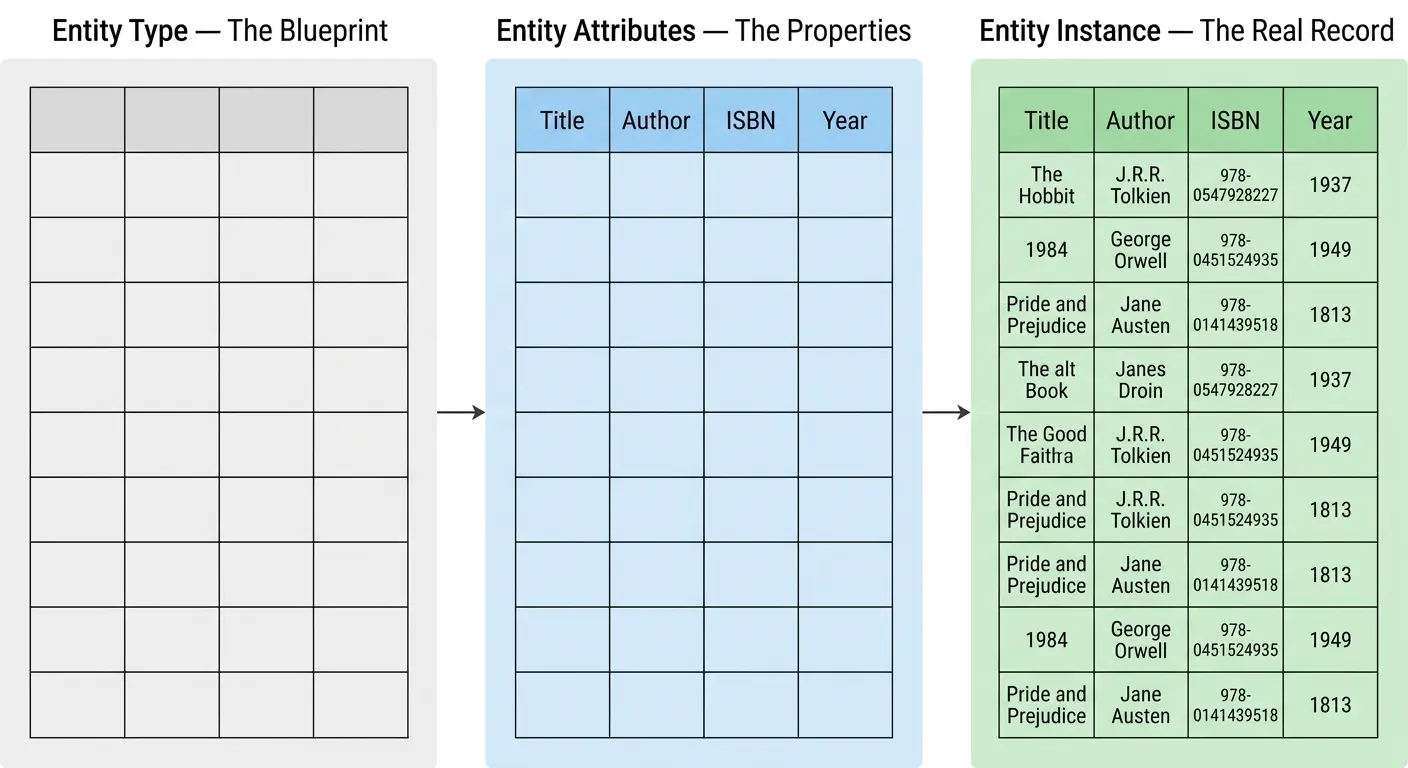
Entity Type: The Blueprint
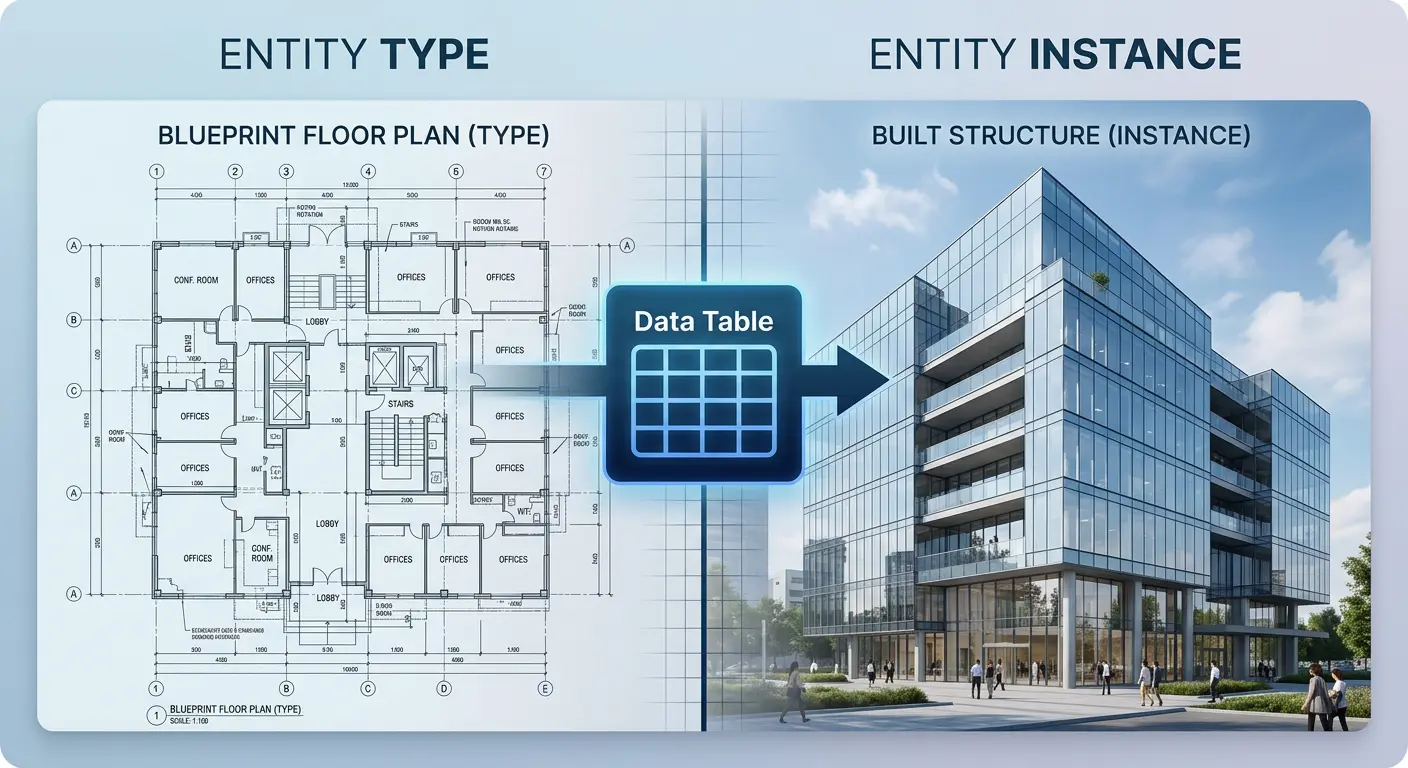
An Entity Type is a template that defines the structure of a category of entities. Think of it as the design of a form before anyone has filled it in.
Key characteristics:
- Represents a general class (e.g., Customer, Employee, Product)
- Defines the attributes applicable to all records
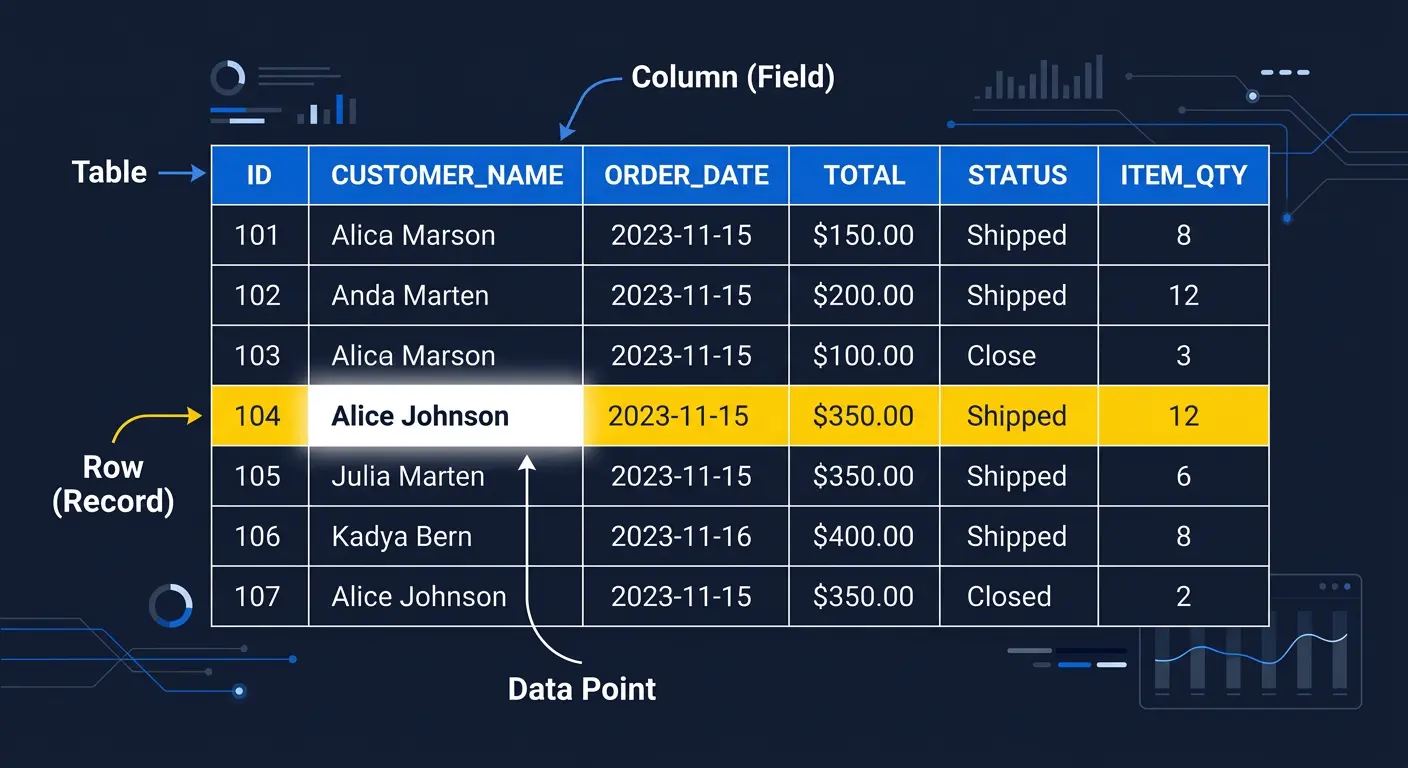
- Maps directly to a table in a relational database
Example, Library System: The Book Entity Type defines: Title, Author, ISBN, Publication Year.
Entity Attribute: The Properties
An Entity Attribute is a property that describes an entity.
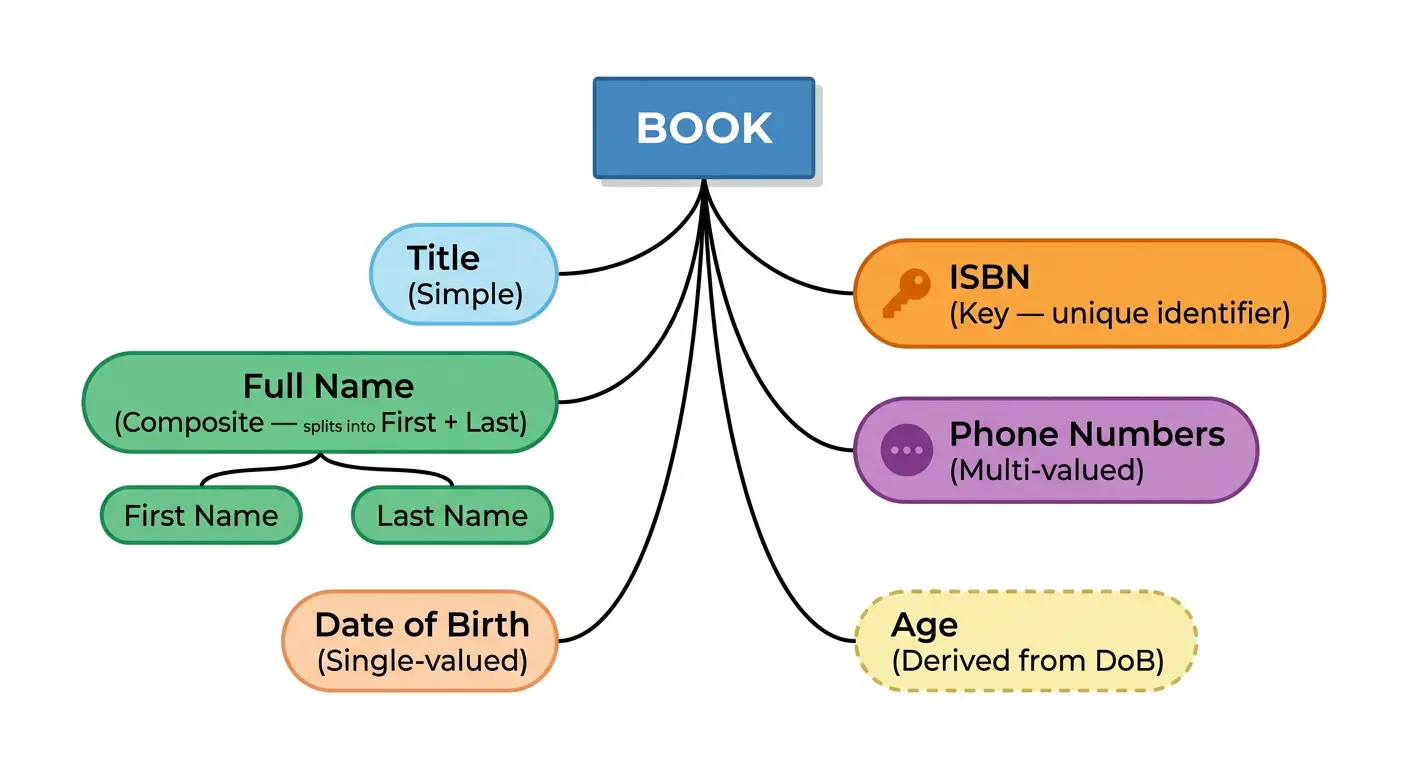
Key characteristics:
- Defines a specific property (e.g., Name, Age, Price)
- Maps to a column in a database table
Types of Attributes in Data Modelling
| Attribute Type | Description | Example |
|---|---|---|
| Simple | Indivisible | Age |
| Composite | Can be split into sub-attributes | Full Name (First + Last) |
| Single-valued | One value per entity | Date of Birth |
| Multi-valued | Multiple values per entity | Phone Numbers |
| Derived | Calculated from other data | Age (from Date of Birth) |
| Key | Uniquely identifies the entity | ISBN, Employee ID |
Entity Instance: The Real Record
An Entity Instance is a specific, individual realisation of an entity type. It is where real data lives. Maps to a row in a relational database table.
The Mental Model: How It All Connects
| Concept | Database Term | Real-World Analogy |
|---|---|---|
| Entity Type | Table | Blank application form template |
| Entity Attribute | Column / Field | A labelled field on the form |
| Entity Instance | Row / Record | One completed application |
Entity Type is the design. Entity Instance is the real-world data built from that design.
Why This Matters for Database and System Design
- Schema design: correctly structured entity types prevent data redundancy
- Database normalisation: prerequisite to applying 1NF, 2NF, 3NF
- Scalability: well-designed entity types grow cleanly
- Data integration: consistent definitions reduce MDM complexity
- AI and ML readiness: clean entity data improves model quality
- Professional development: mastering entity modelling is covered in Data Vault, FCO-IM, and data foundations training
Entity, Entity Type, Attribute, and Instance are not abstract academic concepts. They are the grammar of every database ever built. Whether designing a CRM, data warehouse, or microservice API, these definitions determine how clean, consistent, and scalable your data system will be.

Frequently Asked Questions
Need expert help with data modelling and architecture?
Your Partner Technologies delivers data modelling, architecture, and governance expertise tailored to your business.
Explore Our Services →