Every data strategy, governance framework, and analytics architecture must begin with understanding the type of data being managed. Not all data is the same, and treating it as though it is leads to costly infrastructure decisions and persistent gaps in governance.
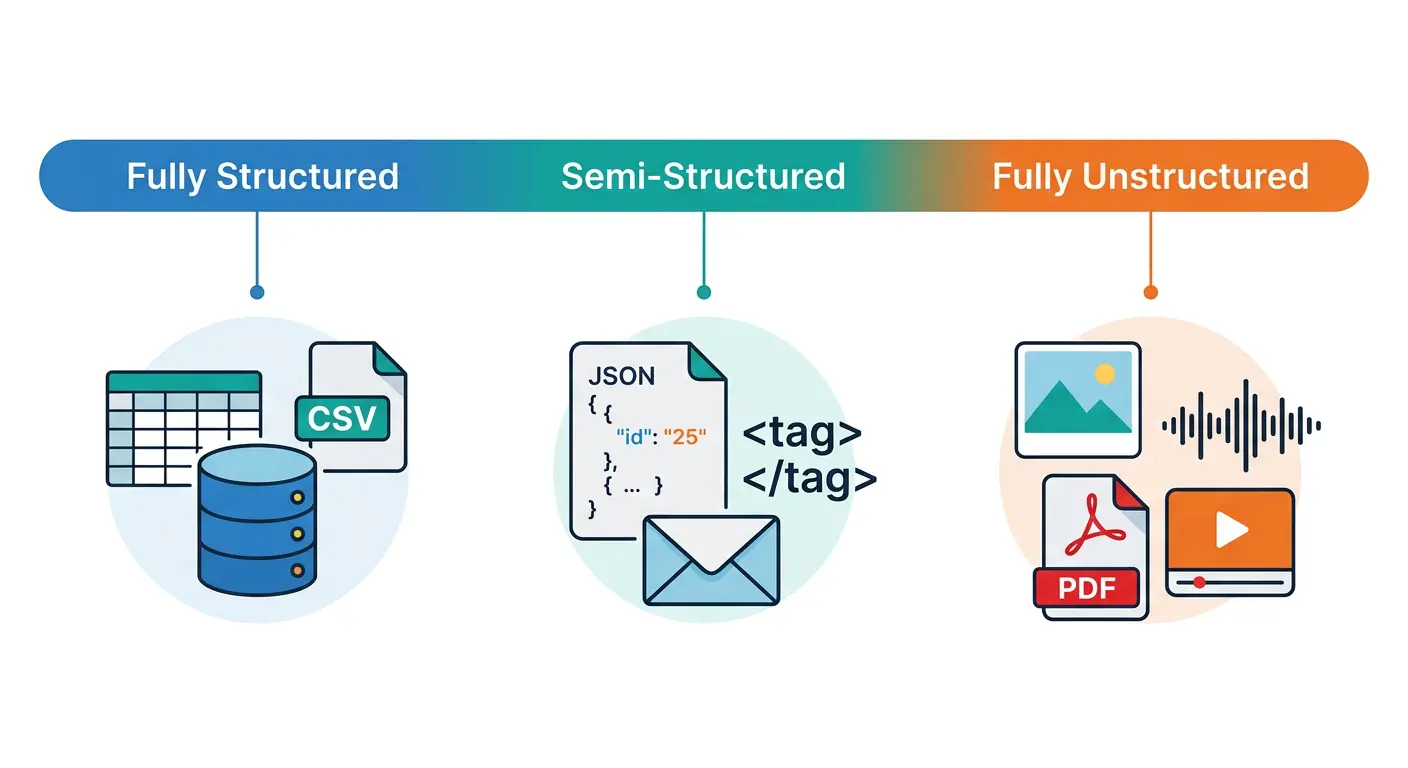
1. Structured Data
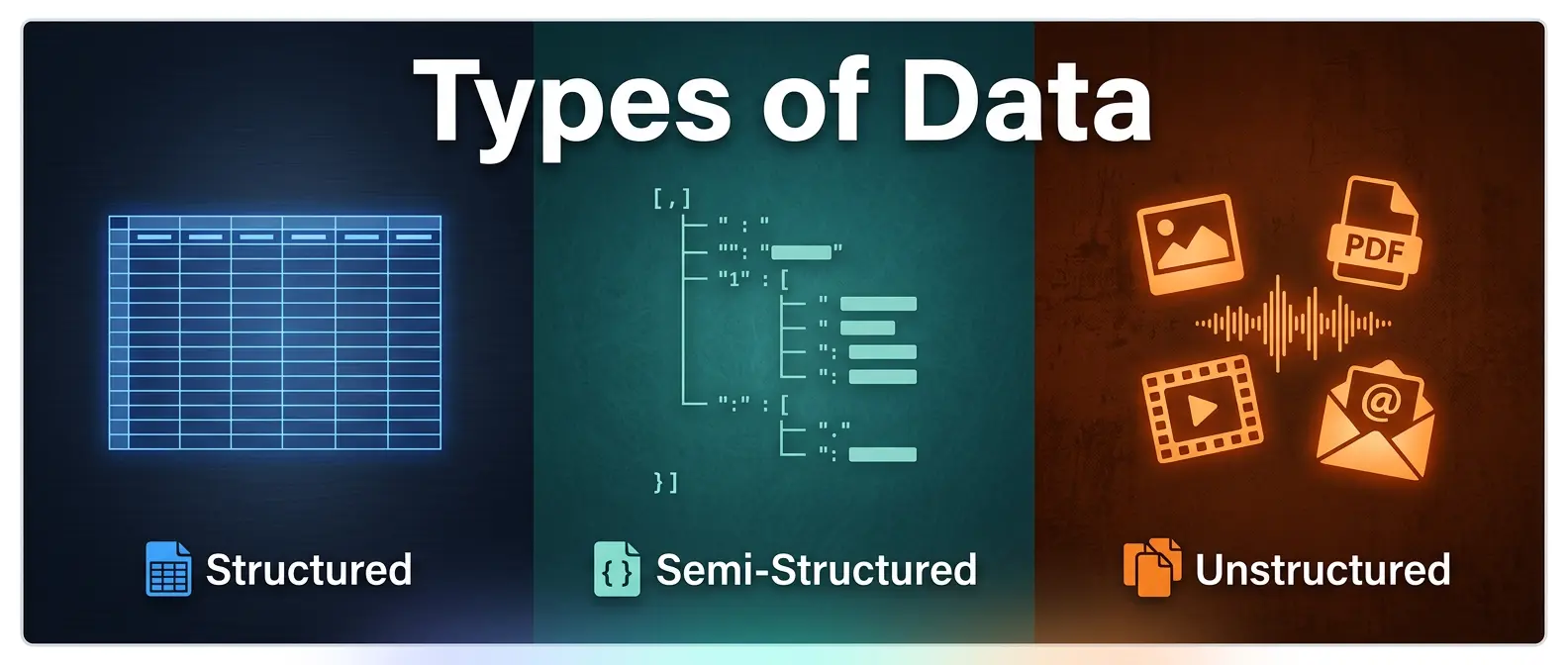
Structured data is information organised in a predefined, consistent format, typically rows and columns within a relational database or spreadsheet.
Common examples: Relational databases, spreadsheets, CSV files, ERP/CRM exports.
| Characteristic | Description |
|---|---|
| Format | Stable, predefined schema |
| Queryability | High, fully addressable with SQL |
| Processing | Automated and scalable |
| Governance | Straightforward |
| Storage | Relational databases (RDBMS) |
2. Semi-Structured Data
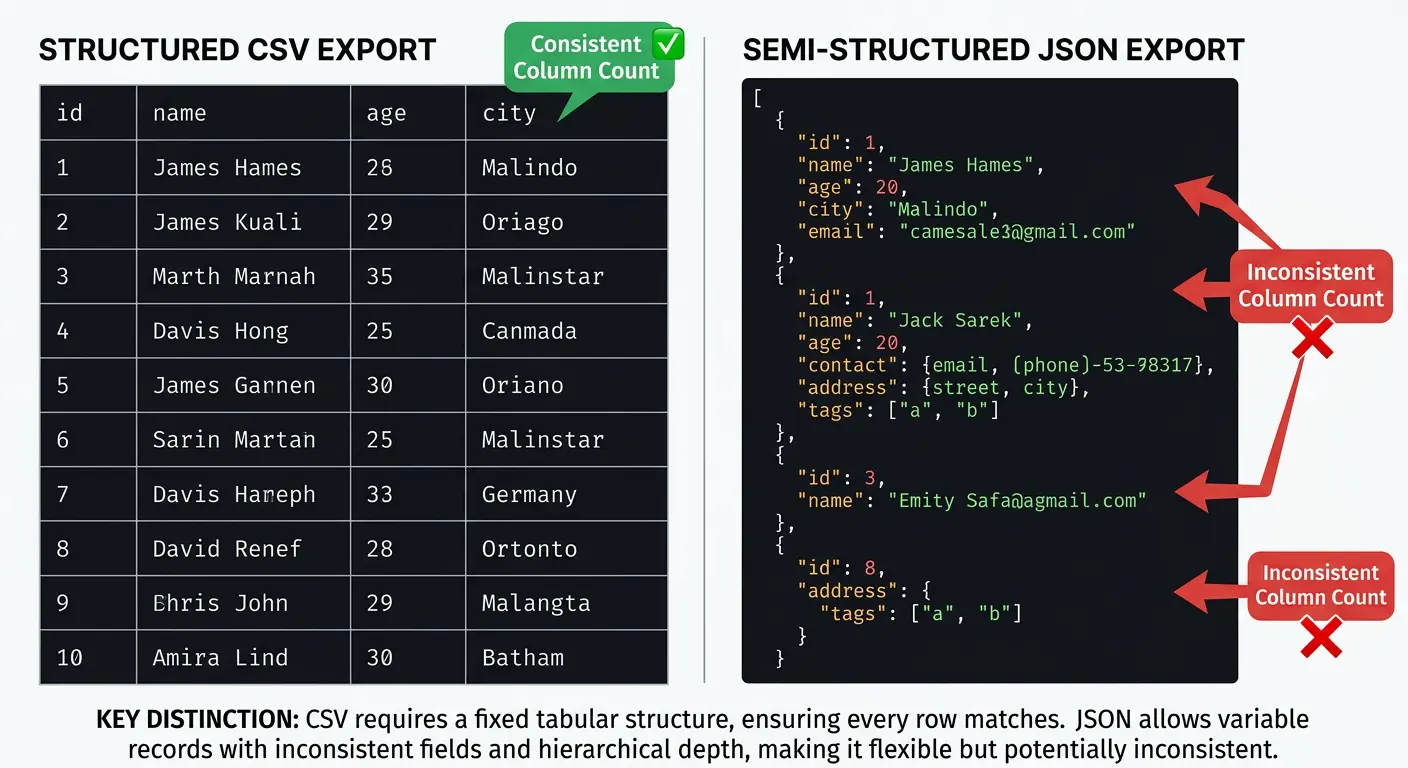
Semi-structured data has some organisational markers but no rigid schema. JSON and XML are the canonical examples. The data carries its own descriptive tags or markers, but the structure can vary from record to record.
Common examples: JSON, REST APIs, XML files, emails, social media posts.
| Characteristic | Description |
|---|---|
| Format | Flexible, structure varies per record |
| Queryability | Moderate, requires JSONPath, XQuery |
| Governance | More complex, schema evolution must be managed |
| Storage | NoSQL databases, data lakes |
3. Unstructured Data
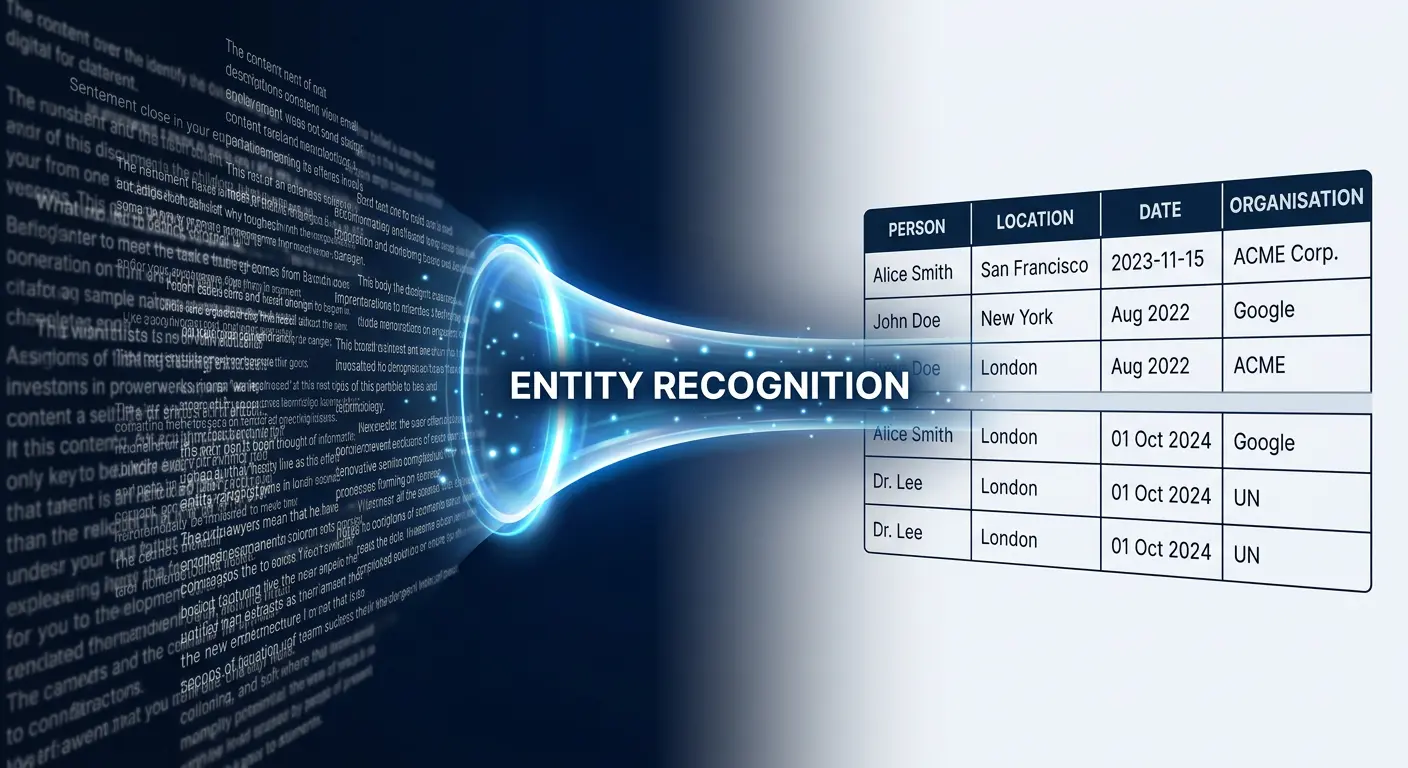
Unstructured data lacks any predefined schema. It is the fastest-growing type and the most challenging to manage. Entity Recognition (NER) is one key technology for extracting value from it.
Common examples: Images, video, audio, PDFs, Word files, chat logs.
| Characteristic | Description |
|---|---|
| Format | None, unknown until examined |
| Queryability | Low, requires AI/ML or specialised parsing |
| Processing | Complex, NLP, computer vision |
| Governance | Highly complex, metadata must be applied externally |
| Storage | Object storage (S3, Azure Blob), data lakes |
Side-by-Side Comparison
| Dimension | Structured | Semi-Structured | Unstructured |
|---|---|---|---|
| Schema | Fixed, predefined | Flexible, partial | None |
| Examples | SQL tables, CSV | JSON, XML, Email | Images, PDFs, Video |
| Query tool | SQL | JSONPath, XQuery | AI/ML, NLP |
| Processing complexity | Low | Medium | High |
| Governance complexity | Low | Medium | High |
| Primary storage | RDBMS | NoSQL, Data Lake | Object Store, Data Lake |
Strategic Implications for Data Architecture
Understanding data types is not an academic exercise. It directly drives architecture and investment decisions:
- Storage architecture decisions: structured data fits RDBMS, semi-structured needs NoSQL or data lakes, and unstructured demands object storage with metadata layers
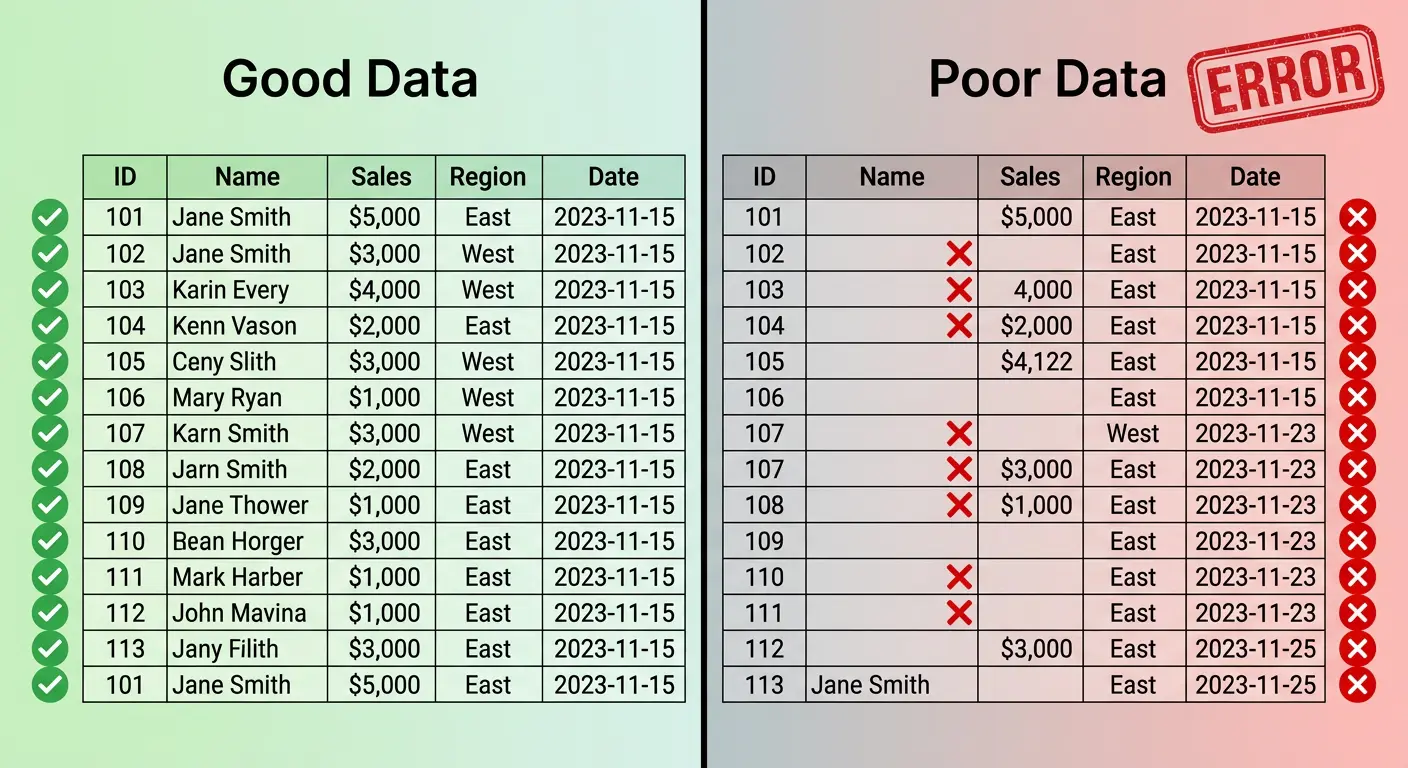
- Governance strategy needs: each type requires different validation, cataloguing, and quality approaches
- AI and ML readiness: converting unstructured data into usable features is often the most expensive part of any AI initiative
Key Takeaway
Structured, semi-structured, and unstructured data are distinct types with different management requirements. A mature data strategy accounts for all three, with appropriate tooling, governance, and architecture for each. A strategic advisory engagement can help you design the right approach.

Need a data architecture that handles all three data types?
Your Partner Technologies designs and implements modern data architectures for structured, semi-structured, and unstructured data.
Explore Our Services →