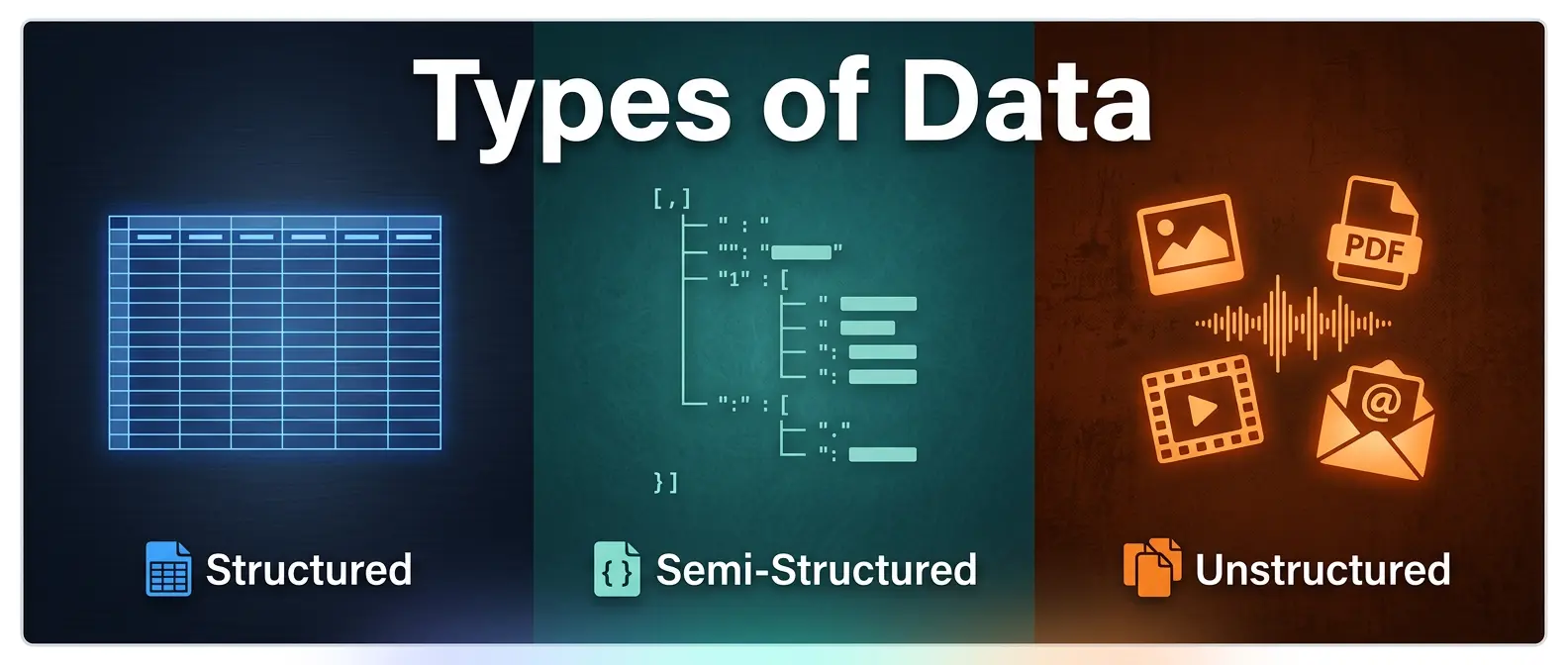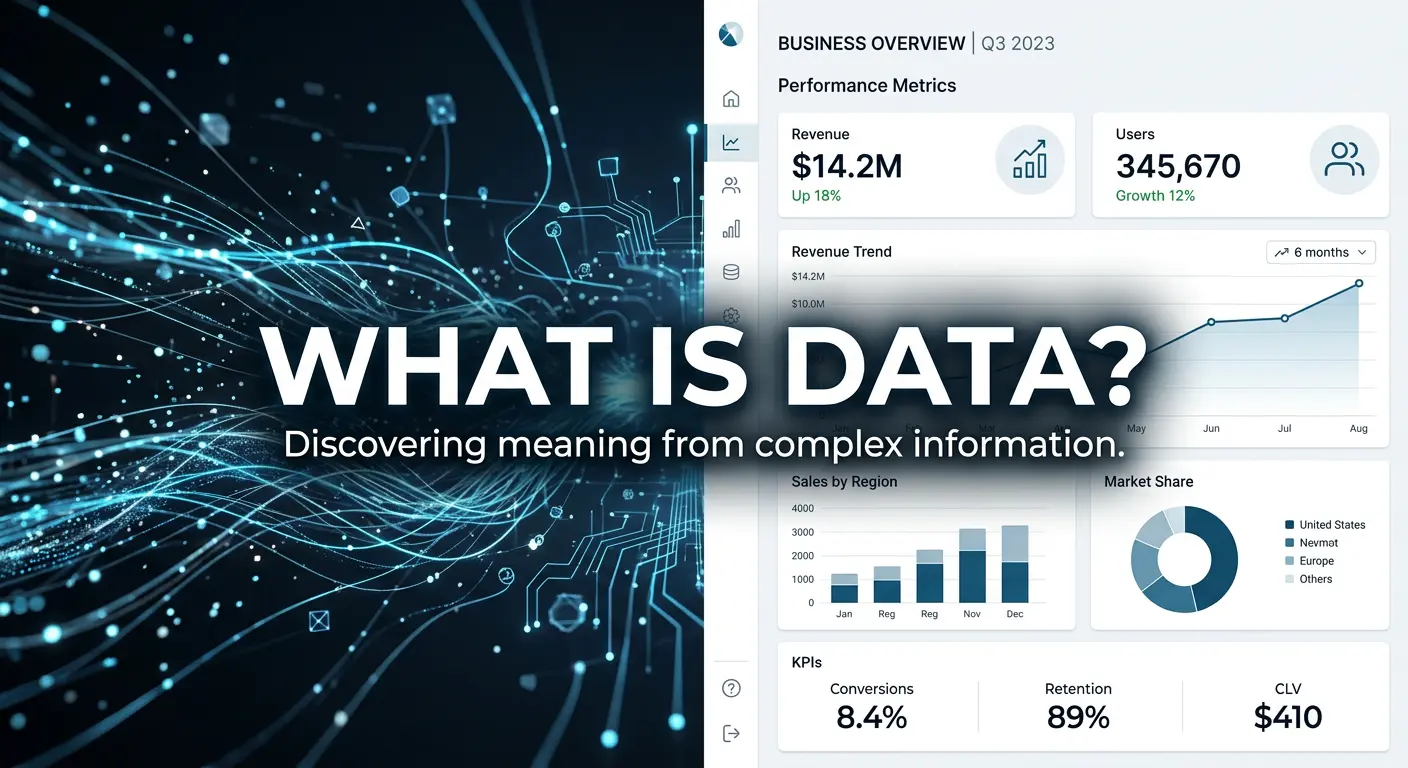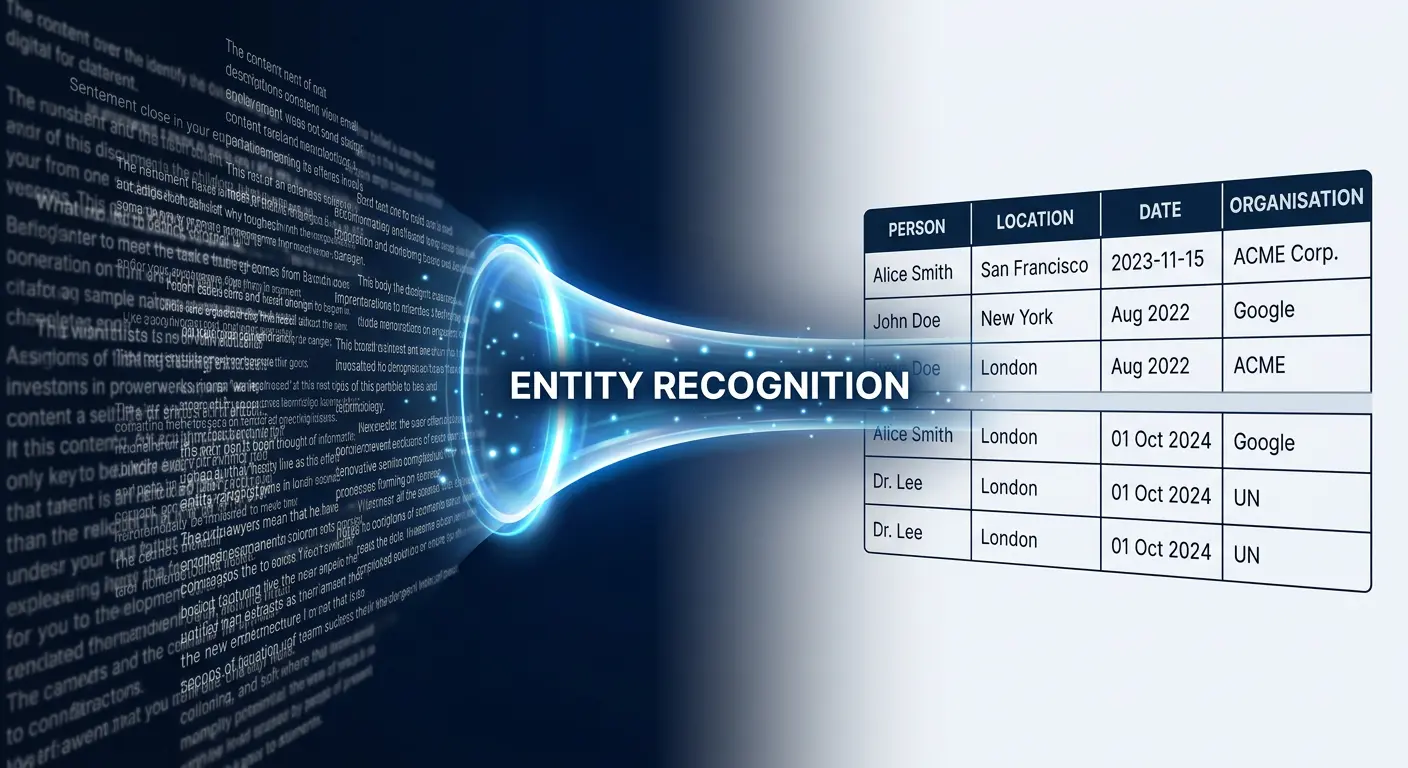
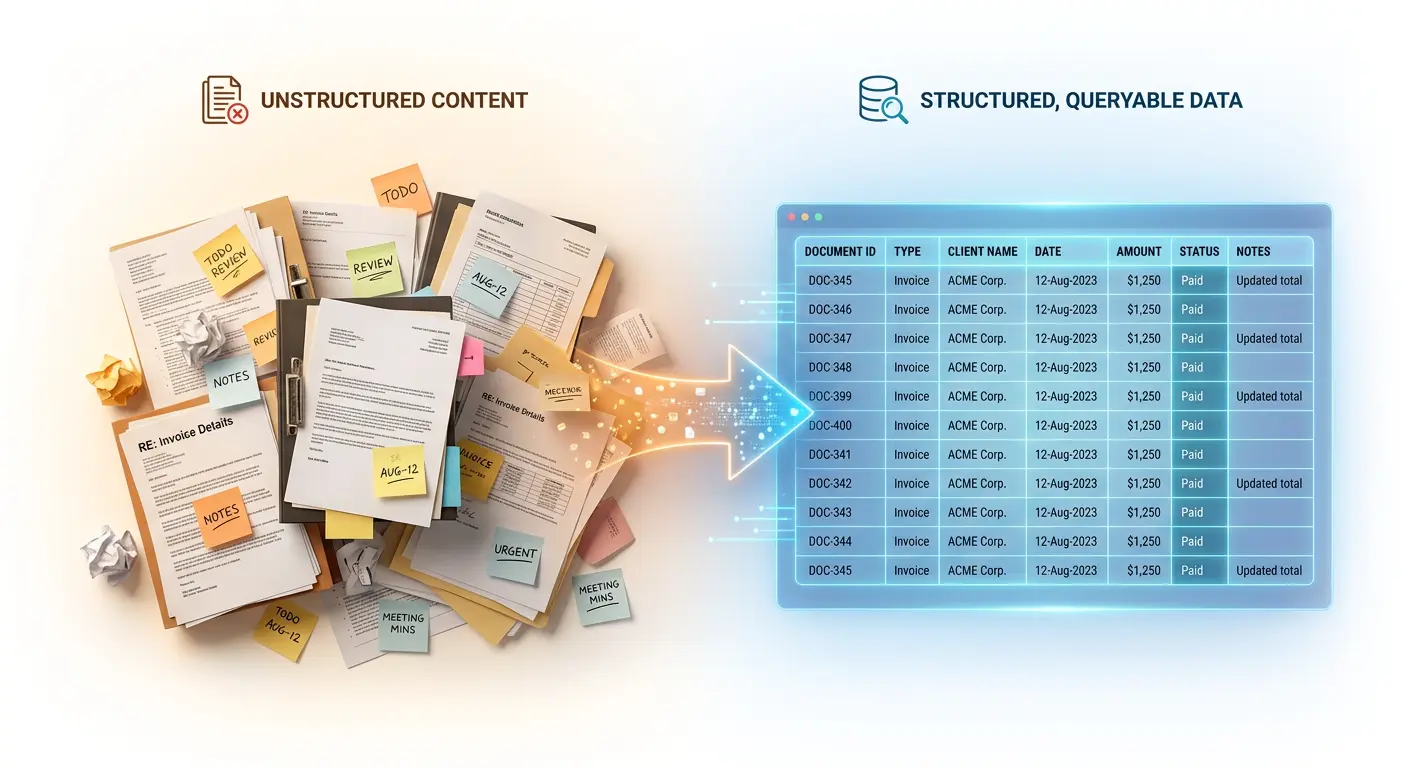
Most enterprise data strategies focus on structured data, the neat rows and columns in a database. But today's organisations generate the majority of their information in unstructured formats: emails, PDFs, contracts, support tickets, social media posts, call transcripts, and meeting notes. Named Entity Recognition (NER) is the technology that makes it possible, automatically identifying and extracting meaningful entities from raw, unstructured text. It is a core capability within modern AI and NLP solutions.

What Is Named Entity Recognition (NER)?
Named Entity Recognition (NER), also referred to as entity identification or entity extraction, is a Natural Language Processing (NLP) technique used to identify and extract meaningful entities from unstructured text. In a structured database, entities such as Customer, Product, Invoice, or Location are explicitly defined in a schema. In unstructured content, those same entities are buried in prose. NER automatically surfaces them.
Why Unstructured Data Creates a Business Problem
Modern organisations produce enormous volumes of unstructured content from:
- Customer emails, support tickets, and chat logs
- Contracts, policies, and compliance documents
- Social media posts, reviews, and feedback forms
- Audio and video content converted to text
- Internal reports, meeting notes, and presentations
Without automated entity extraction, analysts must manually interpret this content, a process that does not scale.
How Entity Recognition Works
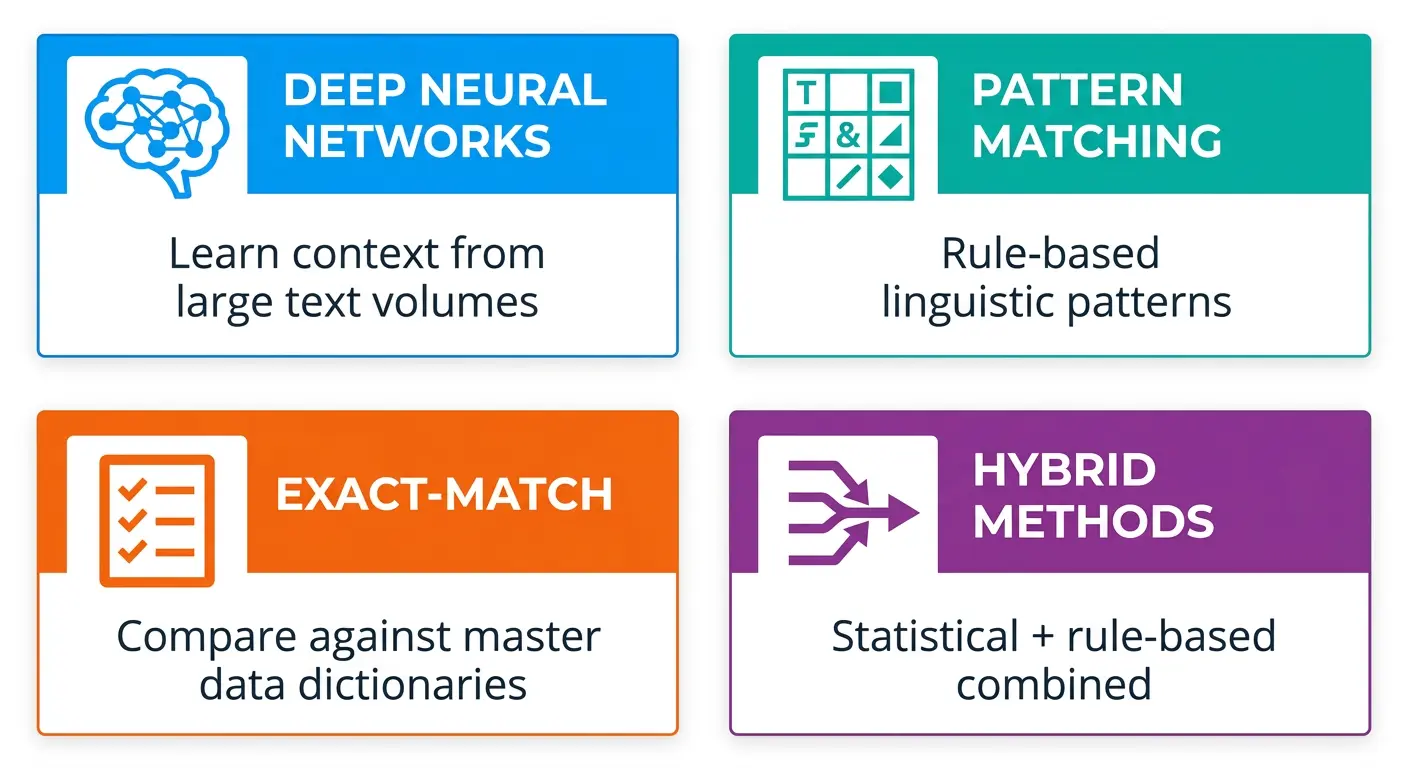
| Approach | How It Works |
|---|---|
| Deep Neural Networks | Learn contextual meaning from large text volumes |
| Pattern Matching | Identify entities using predefined linguistic rules and regular expressions |
| Exact-Match Processing | Compare text against master data lists or reference dictionaries |
| Hybrid Methods | Combine statistical learning with rule-based techniques |
Advanced NER capabilities also include:
- Entity disambiguation
- Relationship extraction
- Entity linking: connecting extracted entities to master reference systems
A Practical Example: NER in Action
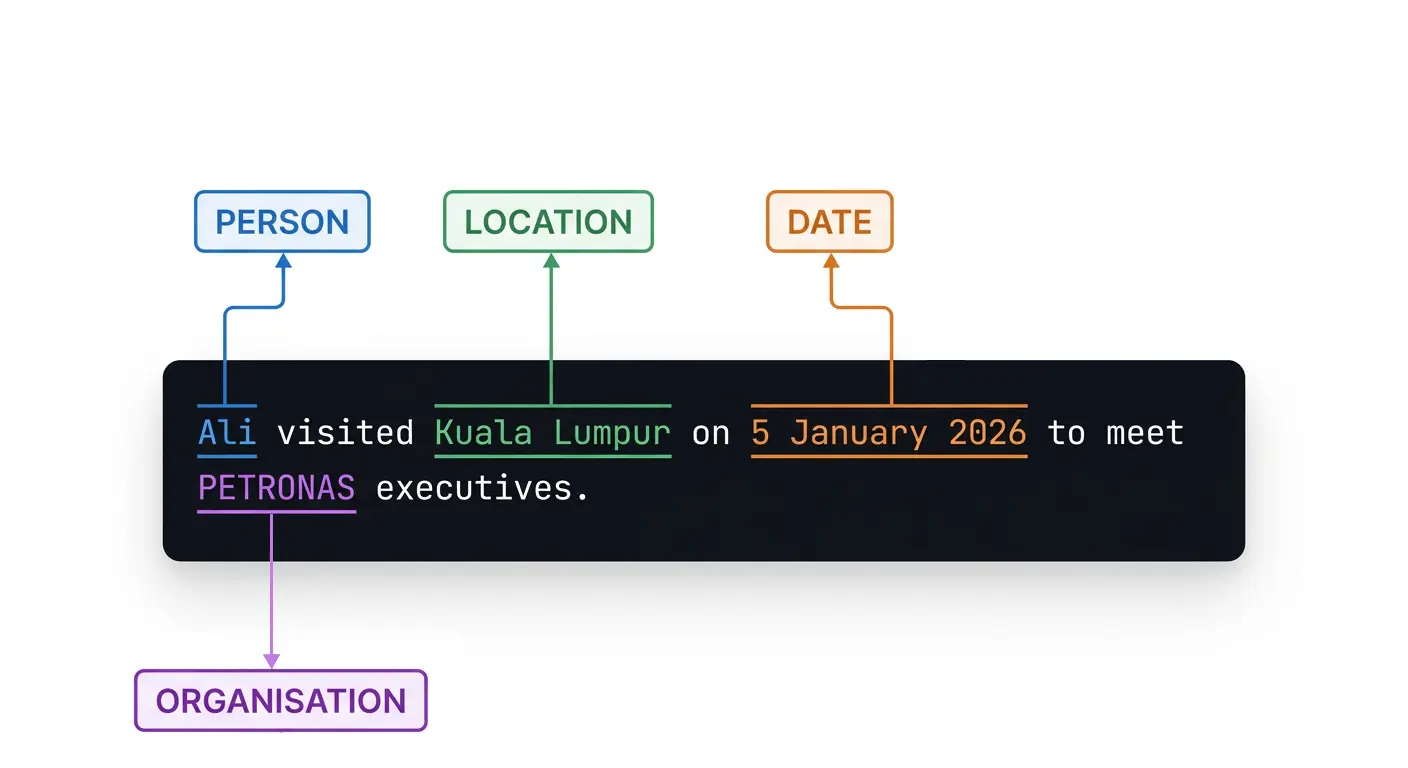
Consider the following sentence:
"Ali visited Kuala Lumpur on 5 January 2026 to meet PETRONAS executives."
| Entity | Label |
|---|---|
| Ali | Person |
| Kuala Lumpur | Location |
| 5 January 2026 | Date |
| PETRONAS | Organisation |
NER in the Data Governance and Modelling Lifecycle
In the data science lifecycle, Entity Recognition is applied during the data wrangling and preprocessing phase. It also plays a central role in metadata enrichment. For data modellers, NER validates the conceptual modelling phase, confirming that real-world entities appearing in unstructured documents align with the entities defined in the logical and physical data models. Integrating NER into your data and AI strategy unlocks governance over previously inaccessible content.
Key Takeaway
Entity Recognition is foundational infrastructure for any organisation that wants to derive value from unstructured content. In an era where the majority of enterprise data exists outside structured databases, NER is the capability that makes it accessible, governable, and analytically useful.
The organisations leading on data quality and AI readiness are those investing in turning unstructured chaos into structured clarity.
Ready to unlock the value in your unstructured data?
Your Partner Technologies builds NLP and data engineering capabilities that transform unstructured content into governed, structured data assets.
Get in Touch